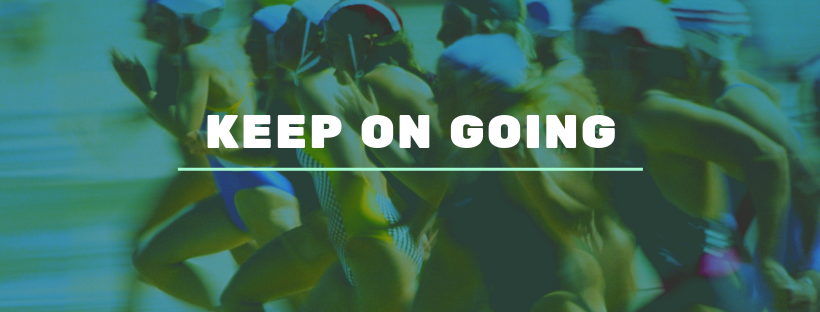
I checked my clock and read 6:45am as I drove into the reservoir’s parking lot. I parked the car and headed inside to sign up. I was there for a race: a 3km swim in one of London’s reservoirs designed as a “tune up” race for my upcoming Ironman. An Ironman comprises a 3.8km swim, a 180km bike and a 42.2km run, all in a single day. This race was designed to test my swim.
I had spent much of the season doing swimming clocking 4km plus sessions on a regular basis, but everything I did was in a pool. I got my race number and quickly got changed into my wetsuit. The water looked cold, but completely flat- like a swimming pool. “I’ll be fine” I thought to myself. By the time we had the race briefing everyone was stretching and ready to go.
“The water temperature is 18 degrees” said the organiser. This was met by a cheer from the crowd- 18 degree water can be considered balmy by open water swimming standards.
We were soon escorted to the reservoir and directed to go down a ramp into the water. I was ready, this was going to be a display of all the swimming practice I had been doing over the winter, this is where those hours in the pool would pay off. I took my first step down the ramp into the water.
It was freezing.
18 degrees seemed a whole lot colder than I remembered. I carried on into the water and once I had let a little water into my wetsuit I was freezing. It was an experience I had only had once before in my life- when I competed in the “Tough Guy” obstacle course- I simply could not stop shivering.
Before I knew it the race had started and I had barely cranked into action. “Swim faster” I thought to myself. I tried to take faster strokes and take more breaths but every time I submerged my head I was met by a punch in the face from the ice cold water of the reservoir. My mind ran amuck as I was beset by panic. I saw more experienced swimmers passing me and my hopes for the race were dashed. I had reached the first buoy, 200m out, when I knew my race was over. I could not stop shivering, I wasn’t finding my rhythm, and all hope of competition was lost. I called in a kayak and DNF’d the race (for those of you who don’t know, DNF means did not finish).
On my way back home I asked myself how this even happened. I had so many questions, what did it mean for my Ironman? Can I even swim? But when it seemed like I had lost all hope, a little voice in my head reminded me that this was the start of a process and something that I should be excited about as opposed to being scared of.
The seeds of improvement
That process is called improvement, and it is the key reason I love endurance sport. In endurance there is always something to improve. Following the race when I was slightly calmer I pinpointed the cause of the problem to my lack of acclimatisation to the cold water. I figured that the simplest way to overcome this problem was to swim open water… A lot.
After a week of open water swimming I found myself comfortable with the cold. The water no longer bothered me to any extent and was something I could deal with. I worked on my sighting and can now say that on the swimming front I am raring to go for my Ironman.
There are 3 key principles I like to remember when it comes to improvement:
Anything is possible:
This is the basis for everything else. You need to remember that no matter who you are and what your situation, you should be able to achieve anything if you use the resources around you properly and actually want to do what you are doing.
Always gather your bearings:
You need to figure out where it is you are and where it is you want to go. Then you need to take a realistic look at what you’re doing to figure out day to day actions you can do which will get you where you need to go.
Get out there and get started:
Once you believe anything is possible and you have your bearings, the final thing is to get out there and get started. You’ll always feel better about something when you make a positive improvement to improve your situation.
Who this blog is for
This blog is not only for endurance junkies (like myself) but it’s for everyday people who want some of the mental and physical lessons of endurance sport as something they can apply to their lives without necessarily committing the time and resources to do an event. Seeing how far you can go, how fast you can go, and how high you can jump are all just facets of personal improvement. And through living the life of endurance you come to see personal improvement permeate the rest of your activities as an unceasing mantra. You’ll find that there are lots of lessons and nuggets of information that are immediately transferrable into a wide variety of other fields.
So stay tuned and follow me on my endurance adventures.
 Endurance Oz